terraform
Terraform Modules: Building Reusable Infrastructure Components
Master Terraform modules to create reusable, maintainable infrastructure components. Learn about module creation, versioning, and best practices for infrastructure as code.
March 15, 2024
Admin KC
5 min read
Introduction to Terraform Modules
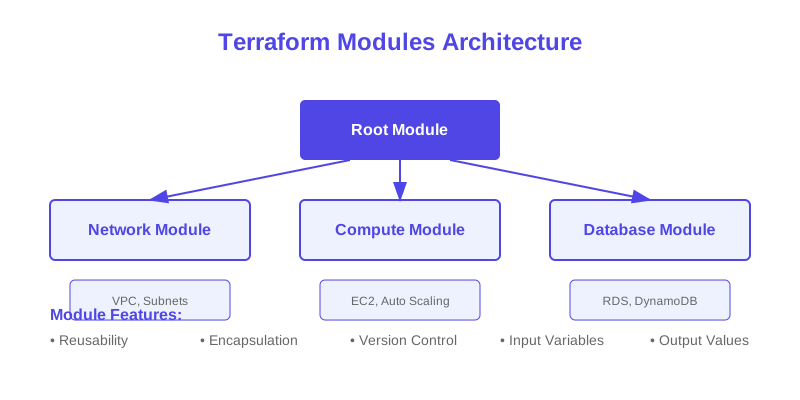
Terraform modules are containers for multiple resources that are used together. They help you organize and reuse your Terraform code across different projects and environments.
Module Basics
Module Structure
module-name/
├── main.tf       # Main module configuration
├── variables.tf  # Input variables
├── outputs.tf    # Output values
├── versions.tf   # Version constraints
└── README.md     # Documentation
Creating a Basic Module
# modules/vpc/main.tf
resource "aws_vpc" "main" {
  cidr_block = var.vpc_cidr

  tags = {
    Name = var.vpc_name
    Environment = var.environment
  }
}

resource "aws_subnet" "public" {
  count = length(var.public_subnets)

  vpc_id     = aws_vpc.main.id
  cidr_block = var.public_subnets[count.index]

  tags = {
    Name = "${var.vpc_name}-public-${count.index + 1}"
  }
}
Module Variables
# modules/vpc/variables.tf
variable "vpc_cidr" {
  description = "CIDR block for VPC"
  type        = string
}

variable "vpc_name" {
  description = "Name tag for VPC"
  type        = string
}

variable "environment" {
  description = "Environment tag"
  type        = string
}

variable "public_subnets" {
  description = "List of public subnet CIDR blocks"
  type        = list(string)
}
Module Outputs
# modules/vpc/outputs.tf
output "vpc_id" {
  description = "ID of the created VPC"
  value       = aws_vpc.main.id
}

output "public_subnet_ids" {
  description = "List of public subnet IDs"
  value       = aws_subnet.public[*].id
}
Using Modules
Local Module Usage
module "vpc" {
  source = "./modules/vpc"

  vpc_cidr        = "10.0.0.0/16"
  vpc_name        = "my-vpc"
  environment     = "production"
  public_subnets  = ["10.0.1.0/24", "10.0.2.0/24"]
}
Remote Module Usage
module "s3_bucket" {
  source  = "terraform-aws-modules/s3-bucket/aws"
  version = "3.15.1"

  bucket = "my-unique-bucket"
  acl    = "private"

  versioning = {
    enabled = true
  }
}
Advanced Module Concepts
Module Composition
# modules/web-app/main.tf
module "vpc" {
  source = "../vpc"

  vpc_cidr       = var.vpc_cidr
  vpc_name       = var.vpc_name
  environment    = var.environment
  public_subnets = var.public_subnets
}

module "ec2_instance" {
  source = "../ec2-instance"

  subnet_id     = module.vpc.public_subnet_ids[0]
  instance_type = var.instance_type
  environment   = var.environment
}
Dynamic Block Usage
# modules/security-group/main.tf
resource "aws_security_group" "this" {
  name        = var.name
  description = var.description
  vpc_id      = var.vpc_id

  dynamic "ingress" {
    for_each = var.ingress_rules
    content {
      from_port   = ingress.value.from_port
      to_port     = ingress.value.to_port
      protocol    = ingress.value.protocol
      cidr_blocks = ingress.value.cidr_blocks
    }
  }
}
Conditional Creation
# modules/rds/main.tf
resource "aws_db_instance" "this" {
  count = var.create_database ? 1 : 0

  identifier        = var.identifier
  engine            = var.engine
  instance_class    = var.instance_class
  allocated_storage = var.allocated_storage

  # ... other configuration ...
}
Module Best Practices
1. Version Constraints
# versions.tf
terraform {
  required_version = ">= 1.0.0"

  required_providers {
    aws = {
      source  = "hashicorp/aws"
      version = "~> 5.0"
    }
  }
}
2. Documentation
# README.md
# VPC Module

This module creates a VPC with public and private subnets.

## Usage

```hcl
module "vpc" {
  source = "./modules/vpc"

  vpc_cidr = "10.0.0.0/16"
  vpc_name = "my-vpc"
}
Inputs
| Name | Description | Type | Default | Required | |------|-------------|------|---------|:--------:| | vpc_cidr | CIDR block for VPC | string | n/a | yes | | vpc_name | Name tag for VPC | string | n/a | yes |
Outputs
| Name | Description | |------|-------------| | vpc_id | ID of the created VPC |
### 3. Input Validation

```hcl
# variables.tf
variable "environment" {
  description = "Environment name"
  type        = string

  validation {
    condition     = contains(["dev", "staging", "prod"], var.environment)
    error_message = "Environment must be one of: dev, staging, prod."
  }
}
Testing Modules
1. Basic Testing
# examples/complete/main.tf
module "vpc" {
  source = "../../"

  vpc_cidr        = "10.0.0.0/16"
  vpc_name        = "example-vpc"
  environment     = "dev"
  public_subnets  = ["10.0.1.0/24", "10.0.2.0/24"]
}

output "vpc_id" {
  value = module.vpc.vpc_id
}
2. Automated Testing
# test/vpc_test.go
package test

import (
  "testing"
  "github.com/gruntwork-io/terratest/modules/terraform"
  "github.com/stretchr/testify/assert"
)

func TestVPCModule(t *testing.T) {
  terraformOptions := &terraform.Options{
    TerraformDir: "../examples/complete",
  }

  defer terraform.Destroy(t, terraformOptions)
  terraform.InitAndApply(t, terraformOptions)

  vpcID := terraform.Output(t, terraformOptions, "vpc_id")
  assert.NotEmpty(t, vpcID)
}
Working with Module Registries
Publishing to Registry
# modules/vpc/main.tf
terraform {
  required_version = ">= 1.0.0"
}

# Add semantic versioning tags in Git
# git tag -a "v1.0.0" -m "Initial stable release"
# git push origin v1.0.0
Module Versioning
module "vpc" {
  source  = "app.terraform.io/example-corp/vpc/aws"
  version = "~> 2.0.0"  # Allows 2.0.x but not 2.1.0

  vpc_cidr = "10.0.0.0/16"
}
Advanced Module Patterns
1. Provider Aliasing
# modules/multi-region/main.tf
provider "aws" {
  alias  = "us_east_1"
  region = "us-east-1"
}

provider "aws" {
  alias  = "us_west_2"
  region = "us-west-2"
}

resource "aws_vpc" "east" {
  provider = aws.us_east_1
  cidr_block = var.east_vpc_cidr
}

resource "aws_vpc" "west" {
  provider = aws.us_west_2
  cidr_block = var.west_vpc_cidr
}
2. Module Templates
# modules/template/main.tf
locals {
  common_tags = {
    Environment = var.environment
    Project     = var.project_name
    Terraform   = "true"
  }
}

resource "aws_vpc" "main" {
  cidr_block = var.vpc_cidr

  tags = merge(local.common_tags, {
    Name = "${var.project_name}-vpc"
  })
}
Conclusion
Terraform modules are essential for:
- Code reusability
- Maintainability
- Standardization
- Version control
- Team collaboration
Next Steps
- Create your first module
- Implement testing strategies
- Publish to a module registry
- Explore advanced patterns
- Integrate with CI/CD
Resources
Terraform
IaC
DevOps
Cloud
Modules