Orchestrating AI/ML Workloads with Kubernetes: Best Practices
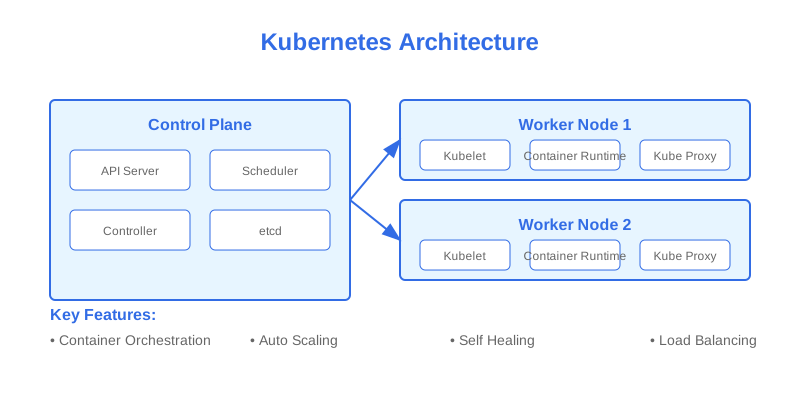
Kubernetes has become the de facto platform for orchestrating containerized applications, and AI/ML workloads are no exception. This guide will walk you through best practices for deploying and managing AI/ML workloads on Kubernetes, covering everything from resource management to scaling strategies and MLOps integration.
$1
1. [Introduction](#introduction)
2. [Resource Management for AI/ML Workloads](#resource-management)
3. [Scaling Strategies](#scaling-strategies)
4. [MLOps Integration](#mlops-integration)
5. [Best Practices and Recommendations](#best-practices)
$1
AI and Machine Learning workloads have unique requirements when it comes to infrastructure. They often need:
Kubernetes provides the perfect platform to manage these requirements through its extensible architecture and rich ecosystem.
$1
$1
`` apiVersion: v1
kind: Pod
metadata:
name: gpu-pod
spec:
containers:
- name: gpu-container
image: nvidia/cuda
resources:
limits:
nvidia.com/gpu: 1
yaml
`
$1
When dealing with AI/ML workloads, proper memory and storage management is crucial:
1. Use appropriate storage classes for different types of data
2. Implement proper resource requests and limits
3. Consider using node selectors for specialized hardware
$1
$1
` apiVersion: autoscaling/v2
kind: HorizontalPodAutoscaler
metadata:
name: ml-model-hpa
spec:
scaleTargetRef:
apiVersion: apps/v1
kind: Deployment
name: ml-model
minReplicas: 1
maxReplicas: 10
metrics:
- type: Resource
resource:
name: cpu
target:
type: Utilization
averageUtilization: 50
yaml
`
$1
For ML training jobs that need to scale up rather than out, consider using the Vertical Pod Autoscaler.
$1
$1
` graph LR
A[Code Repository] --> B[Build Pipeline]
B --> C[Model Training]
C --> D[Model Validation]
D --> E[Model Registry]
E --> F[Deployment]
F --> G[Monitoring]
mermaid
``
$1
Best practices for serving ML models in Kubernetes:
1. Use model servers like TensorFlow Serving or NVIDIA Triton
2. Implement A/B testing and canary deployments
3. Monitor model performance and drift
$1
1. Resource Isolation
- Use namespaces for different environments
- Implement resource quotas
- Set up network policies
2. Monitoring and Observability
- Implement comprehensive metrics collection
- Set up distributed tracing
- Monitor GPU utilization
3. Security Considerations
- Implement RBAC for access control
- Secure model artifacts and data
- Use network policies to control traffic
$1
Kubernetes provides a robust platform for AI/ML workloads when properly configured. By following these best practices, you can build a scalable, efficient, and maintainable ML infrastructure.
$1
Why This Matters
Understanding the business and technical context helps you make informed decisions rather than blindly following patterns.
Trade-offs to Consider
Every architectural decision involves trade-offs. Consider your specific requirements, team expertise, and scale when evaluating options.
When NOT to Use This
Knowing when a solution doesn't apply is as valuable as knowing when it does. Consider alternatives for your specific situation.
Decision Framework
Use this framework to evaluate whether this approach is right for your use case based on your specific constraints and requirements.