gitlab
GitLab Pipeline Schedules: Automating CI/CD Workflows
Learn how to effectively use GitLab Pipeline Schedules to automate your CI/CD workflows. This guide covers schedule creation, configuration, and best practices.
March 15, 2024
Admin KC
4 min read
Introduction to GitLab Pipeline Schedules
GitLab Pipeline Schedules allow you to run pipelines at specific intervals, enabling automated builds, deployments, and maintenance tasks. This guide will show you how to effectively use this powerful feature.
Understanding Pipeline Schedules
Why Use Pipeline Schedules?
- Automated nightly builds
- Scheduled deployments
- Regular maintenance tasks
- Periodic security scans
- Resource-intensive operations during off-peak hours
Creating Pipeline Schedules
Basic Schedule Configuration
- Navigate to your project's CI/CD settings
- Select "Schedules"
- Click "New schedule"
# .gitlab-ci.yml
nightly_build:
  script:
    - echo "Running nightly build"
    - ./build.sh
  only:
    - schedules
Schedule Intervals
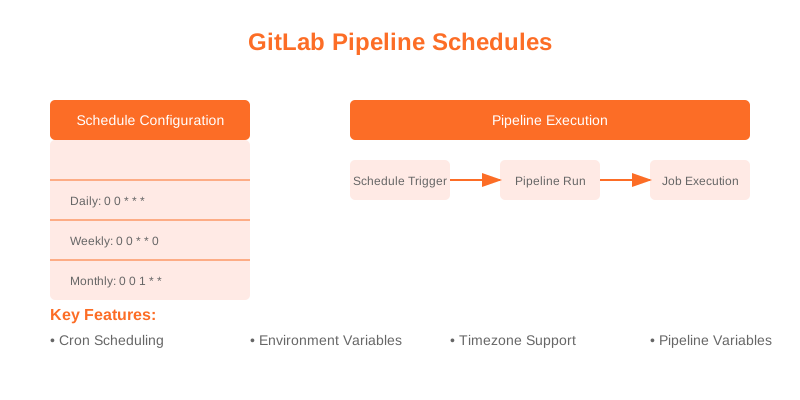
GitLab supports cron syntax for flexible scheduling:
# Common cron patterns
0 0 * * *      # Daily at midnight
0 */4 * * *    # Every 4 hours
0 0 * * 0      # Weekly on Sunday
0 0 1 * *      # Monthly on the 1st
Advanced Configuration
Schedule-specific Variables
# .gitlab-ci.yml with variables
nightly_build:
  variables:
    ENVIRONMENT: "staging"
    BUILD_TYPE: "nightly"
  script:
    - echo "Building for $ENVIRONMENT"
    - ./build.sh --type $BUILD_TYPE
  only:
    - schedules
Conditional Execution
deploy_production:
  script:
    - deploy_to_production.sh
  rules:
    - if: $CI_PIPELINE_SOURCE == "schedule"
      when: manual
    - when: never
Working with Multiple Schedules
Different Schedules for Different Environments
# .gitlab-ci.yml
stages:
  - build
  - test
  - deploy

nightly_staging:
  stage: deploy
  script:
    - deploy_to_staging.sh
  rules:
    - if: $CI_PIPELINE_SOURCE == "schedule" && $SCHEDULE_TYPE == "staging"
      when: on_success

weekly_production:
  stage: deploy
  script:
    - deploy_to_production.sh
  rules:
    - if: $CI_PIPELINE_SOURCE == "schedule" && $SCHEDULE_TYPE == "production"
      when: manual
Schedule Management
Monitoring and Maintenance
# Health check job
schedule_health_check:
  script:
    - check_system_health.sh
    - generate_health_report.sh
  artifacts:
    reports:
      junit: health_report.xml
  only:
    - schedules
Error Handling
nightly_build:
  script:
    - set -e  # Exit on any error
    - ./build.sh
  after_script:
    - |
      if [ $CI_JOB_STATUS == "failed" ]; then
        notify_team.sh "Nightly build failed"
      fi
  only:
    - schedules
Best Practices
1. Resource Optimization
# Resource-intensive job during off-peak hours
data_processing:
  script:
    - process_large_dataset.sh
  only:
    - schedules
  tags:
    - high-cpu
  variables:
    GIT_STRATEGY: none  # Skip git clone if not needed
2. Schedule Documentation
# Well-documented schedule configuration
weekly_backup:
  variables:
    BACKUP_TYPE: "full"
    RETENTION_DAYS: "30"
  script:
    - backup_database.sh
  rules:
    - if: $CI_PIPELINE_SOURCE == "schedule"
      when: always
  tags:
    - backup
  # Runs every Sunday at 2 AM
  only:
    variables:
      - $SCHEDULE_TYPE == "backup"
3. Notification Integration
# Slack notification for scheduled jobs .notify_slack: ¬ify_slack - | curl -X POST -H 'Content-type: application/json' \ --data "{\"text\":\"Pipeline $CI_PIPELINE_ID: $CI_JOB_STATUS\"}" \ $SLACK_WEBHOOK_URL scheduled_deployment: script: - deploy_application.sh after_script: - *notify_slack only: - schedules
Advanced Use Cases
1. Multi-stage Scheduled Pipelines
# Complex scheduled pipeline
stages:
  - prepare
  - build
  - test
  - deploy
  - notify

prepare_environment:
  stage: prepare
  script:
    - setup_environment.sh
  only:
    - schedules

build_application:
  stage: build
  script:
    - build_app.sh
  only:
    - schedules

run_tests:
  stage: test
  script:
    - run_test_suite.sh
  only:
    - schedules

deploy_if_successful:
  stage: deploy
  script:
    - deploy_app.sh
  only:
    - schedules
  when: on_success

notify_team:
  stage: notify
  script:
    - send_notification.sh
  only:
    - schedules
2. Dynamic Schedule Configuration
# Dynamic configuration based on schedule variables
.dynamic_config: &dynamic_config
  before_script:
    - |
      if [ "$SCHEDULE_TYPE" == "backup" ]; then
        export BACKUP_PATH="/path/to/backup"
        export RETENTION_DAYS=30
      elif [ "$SCHEDULE_TYPE" == "cleanup" ]; then
        export CLEANUP_PATH="/path/to/cleanup"
        export AGE_DAYS=7
      fi

scheduled_task:
  <<: *dynamic_config
  script:
    - execute_task.sh
  only:
    - schedules
Troubleshooting
Common Issues and Solutions
- Schedule Not Running
# Add debug information
scheduled_job:
  script:
    - echo "Schedule Type: $SCHEDULE_TYPE"
    - echo "Pipeline Source: $CI_PIPELINE_SOURCE"
    - echo "Current Time: $(date)"
    - your_actual_script.sh
  only:
    - schedules
- Timezone Issues
# Set specific timezone
scheduled_job:
  before_script:
    - export TZ=UTC
  script:
    - echo "Current time: $(date)"
    - your_actual_script.sh
  only:
    - schedules
Conclusion
GitLab Pipeline Schedules are a powerful tool for automating CI/CD workflows. Key takeaways:
- Use appropriate scheduling intervals
- Implement proper error handling
- Monitor schedule execution
- Document your configurations
- Follow security best practices
Next Steps
- Implement scheduled pipelines in your projects
- Explore advanced scheduling patterns
- Integrate with monitoring systems
- Optimize resource usage
- Set up proper notifications
Resources
GitLab
CI/CD
DevOps
Automation