Kubernetes Security Best Practices: A Comprehensive Guide
Learn essential security best practices for Kubernetes clusters, including RBAC, network policies, pod security, and secrets management.
Kubernetes Security Best Practices: A Comprehensive Guide
Security is a critical aspect of running Kubernetes in production. This comprehensive guide covers essential security practices, from authentication and authorization to network policies and container security.
Authentication and Authorization
Understanding Kubernetes RBAC (Role-Based Access Control) is fundamental to securing your cluster.
RBAC Configuration Example
apiVersion: rbac.authorization.k8s.io/v1
kind: Role
metadata:
  namespace: production
  name: pod-reader
rules:
- apiGroups: [""]
  resources: ["pods"]
  verbs: ["get", "watch", "list"]
---
apiVersion: rbac.authorization.k8s.io/v1
kind: RoleBinding
metadata:
  name: read-pods
  namespace: production
subjects:
- kind: User
  name: jane
  apiGroup: rbac.authorization.k8s.io
roleRef:
  kind: Role
  name: pod-reader
  apiGroup: rbac.authorization.k8s.io
Network Security
Implementing network policies is crucial for controlling pod-to-pod communication.
Network Policy Example
apiVersion: networking.k8s.io/v1
kind: NetworkPolicy
metadata:
  name: api-network-policy
  namespace: production
spec:
  podSelector:
    matchLabels:
      app: api
  policyTypes:
  - Ingress
  - Egress
  ingress:
  - from:
    - podSelector:
        matchLabels:
          app: frontend
    ports:
    - protocol: TCP
      port: 8080
  egress:
  - to:
    - podSelector:
        matchLabels:
          app: database
    ports:
    - protocol: TCP
      port: 5432
Pod Security
Implementing pod security policies and contexts to secure container workloads.
Security Context Configuration
apiVersion: v1
kind: Pod
metadata:
  name: secure-pod
spec:
  securityContext:
    runAsNonRoot: true
    runAsUser: 1000
    fsGroup: 2000
  containers:
  - name: app
    image: myapp:1.0
    securityContext:
      allowPrivilegeEscalation: false
      readOnlyRootFilesystem: true
      capabilities:
        drop:
        - ALL
Secrets Management
Best practices for handling sensitive information in Kubernetes.
| Method | Security Level | Use Case | |--------|---------------|----------| | Kubernetes Secrets | Basic | Development | | Vault Integration | High | Production | | Cloud Provider Solutions | High | Cloud-Native | | Sealed Secrets | High | GitOps |
Vault Integration Example
apiVersion: v1
kind: ServiceAccount
metadata:
  name: vault-auth
---
apiVersion: apps/v1
kind: Deployment
metadata:
  name: app
spec:
  template:
    metadata:
      annotations:
        vault.hashicorp.com/agent-inject: "true"
        vault.hashicorp.com/agent-inject-secret-credentials: "database/creds/app"
    spec:
      serviceAccountName: vault-auth
      containers:
      - name: app
        image: myapp:1.0
Image Security
Implementing container image security practices.
Container Image Scanning
apiVersion: batch/v1
kind: CronJob
metadata:
  name: image-scanner
spec:
  schedule: "0 0 * * *"
  jobTemplate:
    spec:
      template:
        spec:
          containers:
          - name: trivy
            image: aquasec/trivy
            args:
            - image
            - --severity
            - HIGH,CRITICAL
            - myapp:1.0
          restartPolicy: OnFailure
Audit Logging
Setting up comprehensive audit logging for security monitoring.
apiVersion: audit.k8s.io/v1
kind: Policy
metadata:
  name: audit-policy
rules:
- level: RequestResponse
  resources:
  - group: ""
    resources: ["secrets", "configmaps"]
- level: Metadata
  resources:
  - group: ""
    resources: ["pods", "services"]
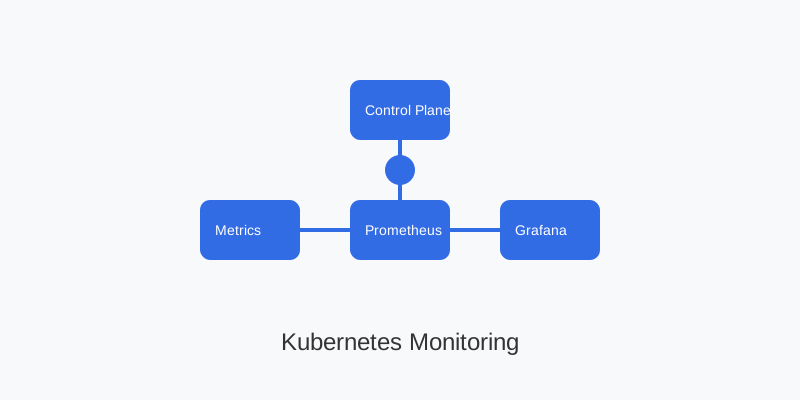
Security Monitoring
Implementing security monitoring and alerting.
Falco Rules Example
apiVersion: v1
kind: ConfigMap
metadata:
  name: falco-rules
data:
  falco_rules.yaml: |
    - rule: Terminal shell in container
      desc: A shell was spawned by a pod in the cluster
      condition: container.id != host and proc.name = bash
      output: Shell opened in container (user=%user.name container=%container.name)
      priority: WARNING
Best Practices Summary
-
Access Control
- Implement RBAC with least privilege
- Use service accounts appropriately
- Regular access review
-
Network Security
- Default deny network policies
- Segment network access
- Encrypt pod-to-pod communication
-
Pod Security
- Enable pod security standards
- Use security contexts
- Implement runtime security
-
Secrets Management
- Use external secrets management
- Encrypt secrets at rest
- Rotate secrets regularly