security
AWS Security Hub: Centralized Security Management and Compliance
Learn how to implement AWS Security Hub for centralized security management, automated security checks, and compliance monitoring across AWS accounts
February 13, 2024
DeveloperHat Team
6 min read
Learn how to implement AWS Security Hub for centralized security management, automated security checks, and compliance monitoring across AWS accounts. This comprehensive guide covers setup, integration, and best practices.
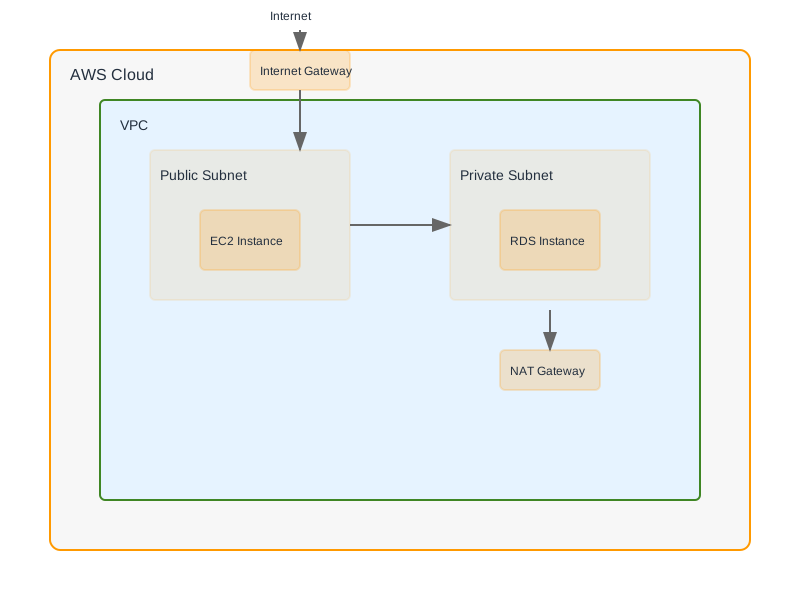
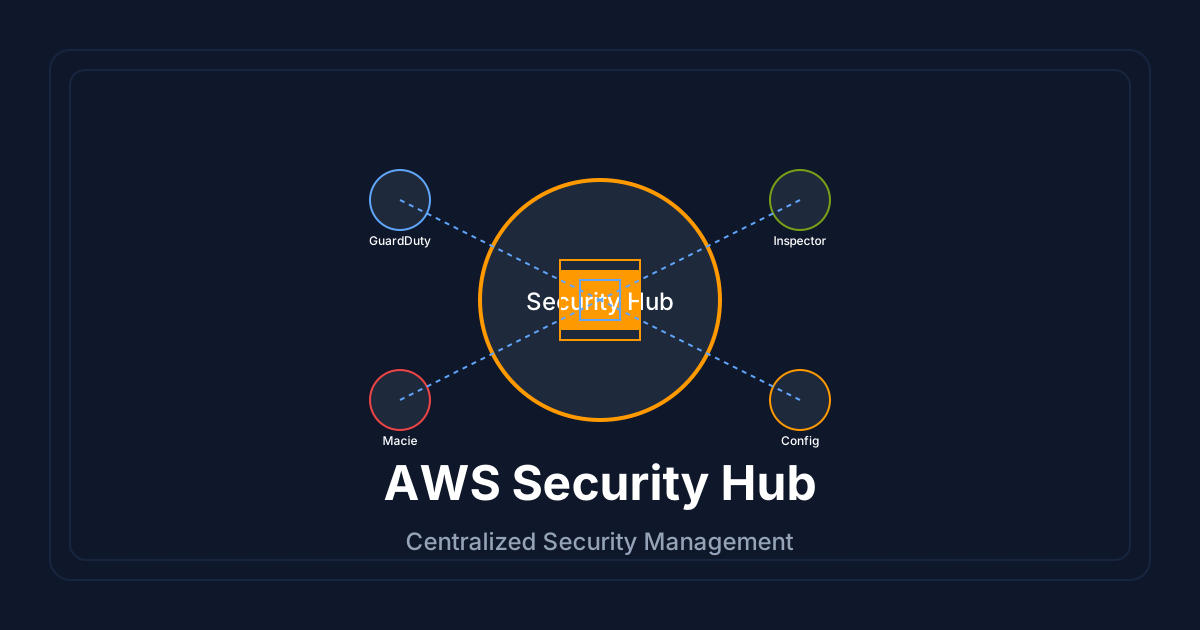
AWS Security Hub Architecture
Understanding AWS Security Hub
AWS Security Hub provides:
- Centralized Security Management: Single pane of glass for security findings
- Automated Security Checks: Continuous monitoring and assessment
- Compliance Monitoring: Track compliance with security standards
- Integration: Works with AWS security services and third-party tools
- Automated Response: Trigger actions based on security findings
Implementation Guide
1. Initial Setup
Enable Security Hub using AWS SDK:
// Security Hub service
import {
  SecurityHubClient,
  EnableSecurityHubCommand,
  EnableStandardsCommand,
  GetEnabledStandardsCommand,
  BatchEnableStandardsCommand,
  StandardsSubscriptionRequest
} from '@aws-sdk/client-securityhub';

interface SecurityHubConfig {
  region: string;
  standards: string[];
}

class SecurityHubService {
  private client: SecurityHubClient;

  constructor(config: SecurityHubConfig) {
    this.client = new SecurityHubClient({ region: config.region });
  }

  async enableSecurityHub(): Promise<void> {
    try {
      const command = new EnableSecurityHubCommand({
        EnableDefaultStandards: true,
        Tags: {
          Environment: 'Production',
          Service: 'SecurityHub'
        }
      });

      await this.client.send(command);
      console.log('Security Hub enabled successfully');
    } catch (error) {
      console.error('Error enabling Security Hub:', error);
      throw error;
    }
  }

  async enableSecurityStandards(standards: StandardsSubscriptionRequest[]): Promise<void> {
    try {
      const command = new BatchEnableStandardsCommand({
        StandardsSubscriptionRequests: standards
      });

      await this.client.send(command);
      console.log('Security standards enabled successfully');
    } catch (error) {
      console.error('Error enabling security standards:', error);
      throw error;
    }
  }

  async getEnabledStandards(): Promise<void> {
    try {
      const command = new GetEnabledStandardsCommand({});
      const response = await this.client.send(command);
      console.log('Enabled standards:', response.StandardsSubscriptions);
    } catch (error) {
      console.error('Error getting enabled standards:', error);
      throw error;
    }
  }
}

// Usage example
async function main() {
  const securityHub = new SecurityHubService({
    region: 'us-west-2',
    standards: [
      'arn:aws:securityhub:::ruleset/cis-aws-foundations-benchmark/v/1.2.0',
      'arn:aws:securityhub:us-west-2::standards/aws-foundational-security-best-practices/v/1.0.0'
    ]
  });

  // Enable Security Hub
  await securityHub.enableSecurityHub();

  // Enable security standards
  const standards: StandardsSubscriptionRequest[] = [
    {
      StandardsArn: 'arn:aws:securityhub:::ruleset/cis-aws-foundations-benchmark/v/1.2.0',
      EnabledRegions: ['us-west-2']
    },
    {
      StandardsArn: 'arn:aws:securityhub:us-west-2::standards/aws-foundational-security-best-practices/v/1.0.0',
      EnabledRegions: ['us-west-2']
    }
  ];

  await securityHub.enableSecurityStandards(standards);

  // Get enabled standards
  await securityHub.getEnabledStandards();
}
2. Processing Findings
Process Security Hub findings:
# Security Hub findings processor
import boto3
import json
from datetime import datetime, timezone
from typing import Dict, List, Optional

class SecurityHubProcessor:
    def __init__(self, region: str):
        self.client = boto3.client('securityhub', region_name=region)
        self.sns = boto3.client('sns', region_name=region)

    def get_findings(self, filters: Optional[Dict] = None) -> List[Dict]:
        """Get Security Hub findings with optional filters."""
        try:
            if filters is None:
                filters = {
                    'RecordState': [{'Value': 'ACTIVE', 'Comparison': 'EQUALS'}],
                    'WorkflowStatus': [{'Value': 'NEW', 'Comparison': 'EQUALS'}]
                }

            response = self.client.get_findings(Filters=filters)
            return response['Findings']
        except Exception as e:
            print(f"Error getting findings: {str(e)}")
            return []

    def update_finding_status(self, finding_id: str, status: str) -> bool:
        """Update the workflow status of a finding."""
        try:
            self.client.update_findings(
                FindingIdentifiers=[
                    {
                        'Id': finding_id,
                        'ProductArn': finding_id.split('/')[0]
                    }
                ],
                WorkflowStatus=status
            )
            return True
        except Exception as e:
            print(f"Error updating finding status: {str(e)}")
            return False

    def create_insight(self, name: str, filters: Dict, group_by_attribute: str) -> str:
        """Create a custom insight based on findings."""
        try:
            response = self.client.create_insight(
                Name=name,
                Filters=filters,
                GroupByAttribute=group_by_attribute
            )
            return response['InsightArn']
        except Exception as e:
            print(f"Error creating insight: {str(e)}")
            return ''

    def process_high_severity_findings(self, sns_topic_arn: str) -> None:
        """Process high severity findings and send notifications."""
        filters = {
            'SeverityLabel': [{'Value': 'HIGH', 'Comparison': 'EQUALS'}],
            'RecordState': [{'Value': 'ACTIVE', 'Comparison': 'EQUALS'}],
            'WorkflowStatus': [{'Value': 'NEW', 'Comparison': 'EQUALS'}]
        }

        findings = self.get_findings(filters)

        for finding in findings:
            # Extract relevant information
            finding_id = finding['Id']
            title = finding['Title']
            description = finding['Description']
            resource_id = finding['Resources'][0]['Id']

            # Create notification message
            message = {
                'finding_id': finding_id,
                'title': title,
                'description': description,
                'resource_id': resource_id,
                'severity': 'HIGH',
                'timestamp': datetime.now(timezone.utc).isoformat()
            }

            # Send notification
            self.sns.publish(
                TopicArn=sns_topic_arn,
                Message=json.dumps(message),
                Subject='High Severity Security Finding'
            )

            # Update finding status
            self.update_finding_status(finding_id, 'NOTIFIED')

    def create_compliance_report(self) -> Dict:
        """Generate a compliance report based on findings."""
        try:
            # Get compliance-related findings
            filters = {
                'ComplianceStatus': [{'Value': 'FAILED', 'Comparison': 'EQUALS'}],
                'RecordState': [{'Value': 'ACTIVE', 'Comparison': 'EQUALS'}]
            }

            findings = self.get_findings(filters)

            # Aggregate findings by standard
            standards_summary = {}
            for finding in findings:
                standard = finding.get('Compliance', {}).get('SecurityControlId', 'Unknown')
                if standard not in standards_summary:
                    standards_summary[standard] = {
                        'failed': 0,
                        'resources': set()
                    }

                standards_summary[standard]['failed'] += 1
                for resource in finding['Resources']:
                    standards_summary[standard]['resources'].add(resource['Id'])

            # Format report
            report = {
                'generated_at': datetime.now(timezone.utc).isoformat(),
                'total_findings': len(findings),
                'standards_summary': {
                    standard: {
                        'failed_controls': info['failed'],
                        'affected_resources': len(info['resources'])
                    }
                    for standard, info in standards_summary.items()
                }
            }

            return report
        except Exception as e:
            print(f"Error generating compliance report: {str(e)}")
            return {}

# Usage example
def main():
    processor = SecurityHubProcessor('us-west-2')

    # Process high severity findings
    processor.process_high_severity_findings(
        'arn:aws:sns:us-west-2:123456789012:security-alerts'
    )

    # Create custom insight
    filters = {
        'SeverityLabel': [{'Value': 'HIGH', 'Comparison': 'EQUALS'}],
        'ResourceType': [{'Value': 'AwsIamUser', 'Comparison': 'EQUALS'}]
    }
    processor.create_insight(
        'High Severity IAM Findings',
        filters,
        'ResourceId'
    )

    # Generate compliance report
    report = processor.create_compliance_report()
    print(json.dumps(report, indent=2))

if __name__ == '__main__':
    main()
Security Hub Findings Flow
Best Practices
1. Security Score
- Monitor security score regularly
- Track score trends
- Address findings promptly
- Document improvements
- Regular assessments
2. Compliance
- Enable relevant standards
- Regular compliance checks
- Document exceptions
- Track remediation
- Maintain evidence
3. Integration
- Enable all relevant services
- Configure automated responses
- Set up notifications
- Monitor integration health
- Regular testing
4. Monitoring
- Set up dashboards
- Configure alerts
- Track metrics
- Regular reviews
- Incident response
Conclusion
Effective Security Hub implementation requires:
- Proper configuration
- Regular monitoring
- Automated responses
- Compliance tracking
- Continuous improvement
Remember to:
- Monitor regularly
- Respond promptly
- Document changes
- Test responses
- Update configurations
Additional Resources
AWS
Security
Compliance
Monitoring