azure
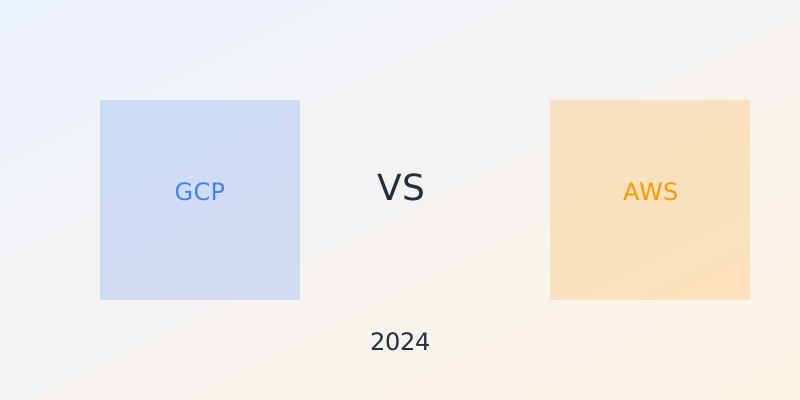
Azure Virtual Machines vs AWS EC2: Which One Should You Use?
A detailed comparison of Azure Virtual Machines and AWS EC2 instances to help you choose the right cloud computing service.
March 20, 2024
Admin
4 min read
Azure Virtual Machines vs AWS EC2: Which One Should You Use?
Azure VM vs AWS EC2 Overview
Flowchart Diagram
Rendering diagram...
What You'll Learn
- Key differences between Azure VMs and EC2
- Pricing comparison and cost optimization
- Performance characteristics
- Use cases for each platform
- Migration considerations
Core Features Comparison
Computing Resources
| Feature | Azure Virtual Machines | AWS EC2 |
|---|---|---|
| Instance Types | General Purpose, Memory Optimized, Compute Optimized, GPU | General Purpose, Memory Optimized, Compute Optimized, GPU, FPGA |
| Max vCPUs | Up to 416 vCPUs | Up to 448 vCPUs |
| Max Memory | Up to 11.4 TB | Up to 24 TB |
Storage Options
Storage Comparison
| Feature | Azure Managed Disks | AWS EBS |
|---|---|---|
| Max Volume Size | 32 TB | 16 TB |
| IOPS | Up to 160K | Up to 256K |
| Encryption | Built-in encryption | Built-in encryption |
Networking Features
Network Comparison
| Feature | Azure | AWS |
|---|---|---|
| Virtual Network | Azure VNet | Amazon VPC |
| Load Balancing | Azure Load Balancer | Elastic Load Balancer |
| CDN | Azure CDN | CloudFront |
Pricing Models
Cost Comparison
| Pricing Model | Azure | AWS |
|---|---|---|
| On-Demand | Pay-as-you-go | Pay-as-you-go |
| Reserved | 1 or 3 years | 1 or 3 years |
| Spot | Spot VMs | Spot Instances |
Use Cases
When to Choose Azure VMs
-
Microsoft Workloads
- Windows Server applications
- SQL Server deployments
- Active Directory services
-
Enterprise Integration
- Seamless Azure AD integration
- Microsoft 365 integration
- Hybrid cloud scenarios
-
Development Environments
- .NET development
- Visual Studio integration
- Azure DevOps workflows
When to Choose AWS EC2
-
Web Applications
- Scalable web hosting
- Microservices architecture
- Container deployments
-
Big Data Processing
- Data analytics workloads
- Machine learning training
- High-performance computing
-
Startup Environments
- Cost-effective scaling
- Wide service integration
- Global infrastructure
Performance Comparison
Benchmark Results
| Workload Type | Azure Performance | AWS Performance |
|---|---|---|
| CPU-Intensive | Excellent | Excellent |
| Memory-Intensive | Very Good | Excellent |
| I/O-Intensive | Very Good | Excellent |
Migration Considerations
Migration Factors
| Factor | Azure Consideration | AWS Consideration |
|---|---|---|
| Tools | Azure Migrate | AWS Migration Hub |
| Assessment | Azure Migrate Assessment | AWS Migration Evaluator |
| Support | Microsoft FastTrack | AWS Migration Acceleration |
Security Features
Security Comparison
| Feature | Azure Implementation | AWS Implementation |
|---|---|---|
| Identity | Azure Active Directory | AWS IAM |
| Firewall | Network Security Groups | Security Groups |
| Monitoring | Azure Monitor | CloudWatch |
Management Tools
Administrative Features
| Feature | Azure Tools | AWS Tools |
|---|---|---|
| Console | Azure Portal | AWS Management Console |
| CLI | Azure CLI | AWS CLI |
| Templates | ARM Templates | CloudFormation |
Making the Decision
Decision Framework
-
Evaluate existing infrastructure
- Current technology stack
- Team expertise
- Integration requirements
-
Consider business requirements
- Budget constraints
- Compliance needs
- Performance requirements
-
Assess future needs
- Scalability requirements
- Geographic expansion
- Feature roadmap
Conclusion
Both Azure Virtual Machines and AWS EC2 offer robust cloud computing solutions. Azure VMs excel in Microsoft workloads and enterprise integration, while AWS EC2 shines in web applications and startup environments. The choice depends on your specific needs, existing infrastructure, and long-term cloud strategy.
Additional Resources
Azure
AWS
Virtual Machines
EC2
Cloud Computing